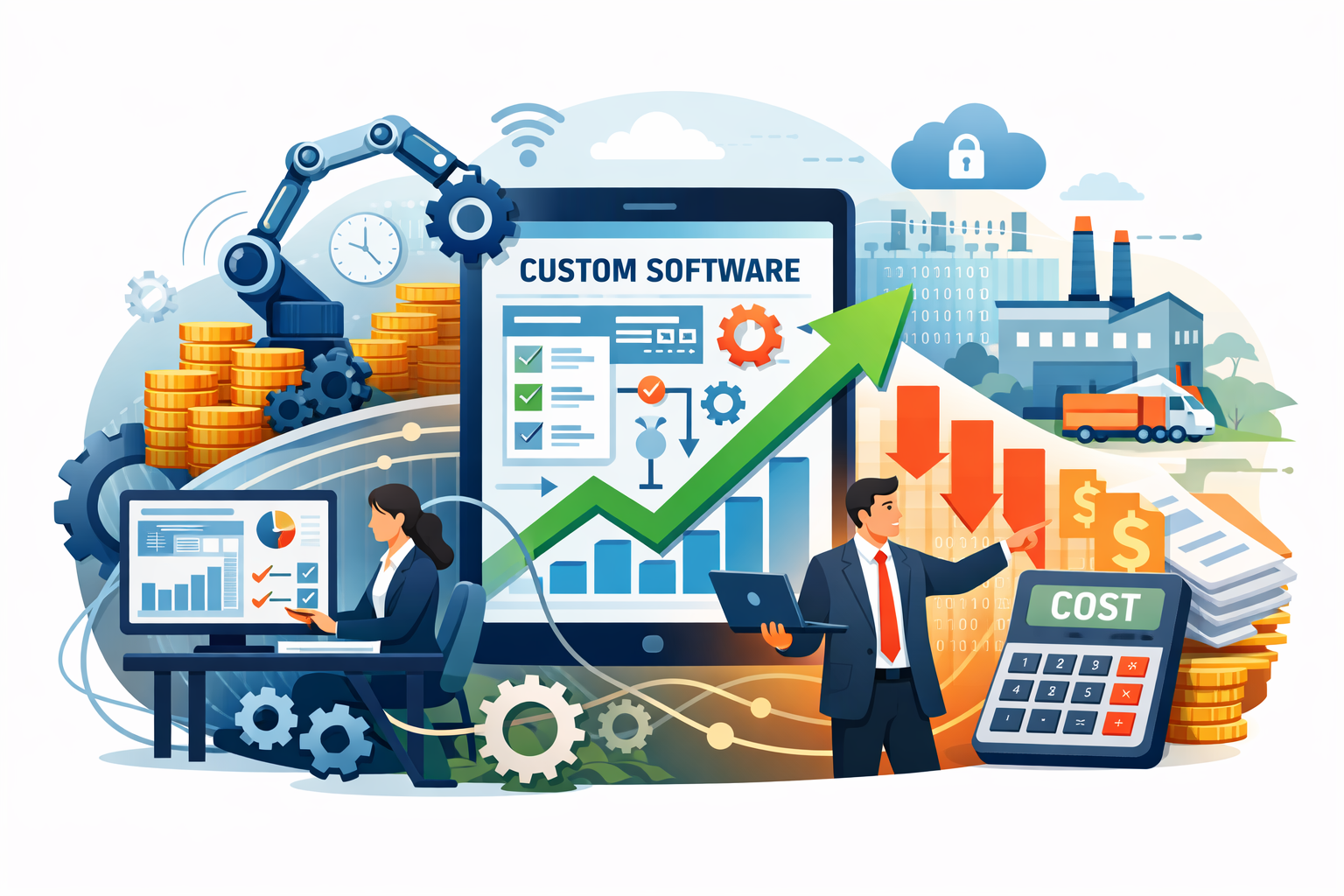
How Custom Software Reduces Operational Costs for Businesses
Learn how custom software solutions help companies reduce operational costs, automate workflows, and improve efficiency across departments.
How Custom Software Reduces Operational Costs for Businesses
Operational costs are one of the biggest challenges companies face as they grow. From manual processes to inefficient workflows, many businesses unknowingly spend significant resources on activities that could be automated or optimized.
While off-the-shelf software solutions may appear convenient, they often fail to adapt to the unique needs of a company. This leads to inefficiencies, additional tools, and costly workarounds.
Custom software offers a powerful alternative. By designing software specifically tailored to a company's workflows, organizations can significantly reduce operational costs while improving productivity and scalability.
1. Eliminating Inefficient Manual Processes
Many companies still rely on manual operations such as spreadsheets, email-based workflows, and repetitive administrative tasks. These processes are time-consuming and prone to human error.
Custom software can automate these processes completely. Instead of employees manually transferring data between systems or performing repetitive tasks, automated workflows handle these operations instantly.
This automation reduces labor costs, minimizes errors, and allows employees to focus on higher-value activities such as strategy, customer service, or innovation.
2. Reducing Software Fragmentation
Businesses often rely on multiple software tools to manage different aspects of their operations: accounting software, project management tools, CRM systems, inventory platforms, and more.
While each tool may work well individually, the lack of integration between them creates inefficiencies. Employees may need to duplicate data entry or switch constantly between platforms.
Custom software can consolidate multiple workflows into a single integrated platform. This reduces licensing costs, simplifies training, and eliminates the inefficiencies caused by disconnected systems.
3. Automating Repetitive Business Workflows
Many operational costs originate from repetitive tasks that employees perform daily. Examples include generating reports, sending notifications, processing orders, or updating databases.
With custom software, these processes can be fully automated through background services, automated triggers, and intelligent workflows.
Automation ensures that tasks are completed consistently and quickly without requiring manual intervention. Over time, this leads to substantial cost savings.
4. Improving Operational Efficiency
Efficiency is one of the main drivers of cost reduction. When employees have access to tools designed specifically for their workflow, they can complete tasks faster and with fewer mistakes.
Custom software allows companies to design interfaces and processes that match exactly how teams operate. This removes unnecessary steps and reduces operational friction.
For example, a production company might integrate order management, inventory tracking, and manufacturing scheduling into a single system, dramatically improving productivity.
5. Better Data Management and Decision Making
Data fragmentation is another common source of operational inefficiency. When data is spread across multiple systems, it becomes difficult to generate accurate reports and insights.
Custom software can centralize business data in a single system, allowing companies to generate real-time analytics and dashboards.
This improves decision making, reduces reporting time, and allows managers to identify inefficiencies or cost-saving opportunities more quickly.
6. Scalability Without Increasing Complexity
As businesses grow, their operational processes often become more complex. Off-the-shelf software may not scale effectively with these evolving needs.
Custom software can be designed with scalability in mind. New modules, integrations, or features can be added as the company grows.
This prevents the need to replace entire systems in the future and protects the company's technology investment over time.
7. Reducing Long-Term Software Costs
At first glance, off-the-shelf software may appear cheaper than custom development. However, over time, subscription fees, licensing costs, and integration challenges can become significant.
Custom software eliminates recurring licensing costs and provides complete control over the system.
Companies can decide how and when to expand the platform without being limited by third-party pricing models or restrictions.
8. Improving Security and Reliability
Security incidents and system failures can generate significant operational costs. Data breaches, downtime, and system vulnerabilities can disrupt business operations.
Custom software allows organizations to implement security measures tailored to their specific needs and infrastructure.
This improves reliability and reduces the risk of expensive security incidents or operational disruptions.
9. Competitive Advantage Through Technology
Companies that invest in custom technology often gain a significant competitive advantage. Efficient processes allow businesses to deliver services faster, reduce operational overhead, and scale more effectively.
Instead of adapting business processes to generic software, companies can design technology that supports their strategy and growth.
This alignment between technology and business objectives leads to long-term efficiency and cost reduction.
Conclusion
Reducing operational costs is not only about cutting expenses but also about improving how a company operates. Custom software provides a strategic way to optimize workflows, automate repetitive tasks, and integrate business systems.
By investing in tailored software solutions, companies can eliminate inefficiencies, improve productivity, and create scalable infrastructures that support long-term growth.
For many organizations, custom software is not simply a technology upgrade. It is a long-term investment in operational efficiency and business success.
Category
TechnologyRelated Articles
Explore more from Technology